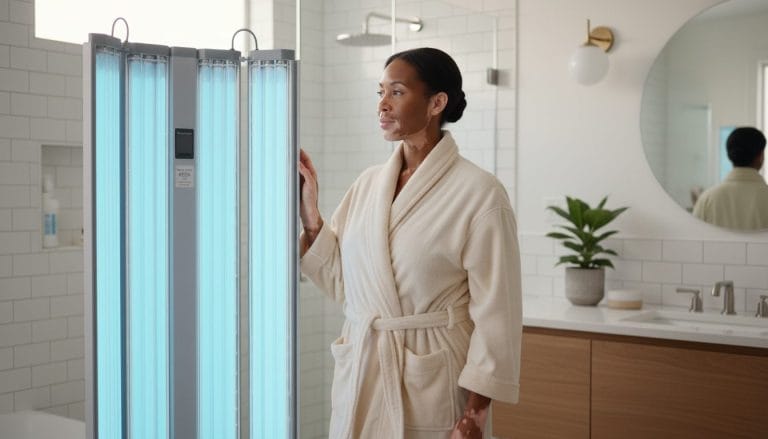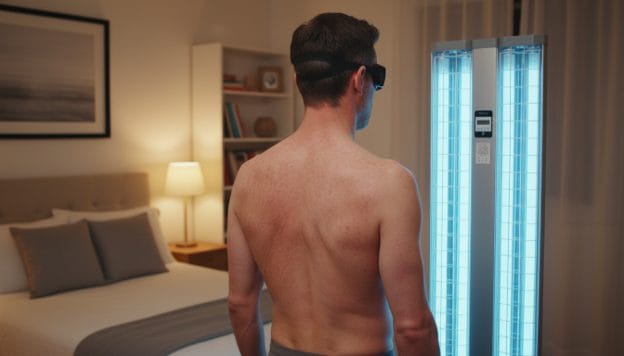
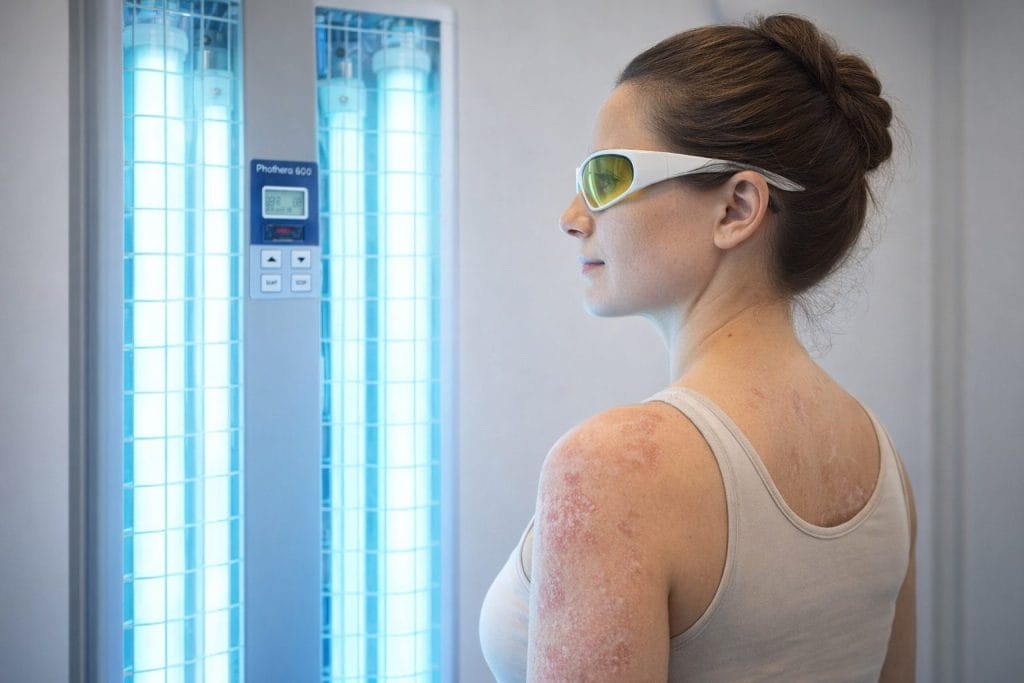
If you’re living with psoriasis, you already know how frustrating it can be. The constant cycle of flares, the trial-and-error of finding treatments that work, the endless dermatologist appointments—it’s exhausting. You’ve probably tried countless creams, ointments, and lifestyle changes. But have you considered bringing light therapy into your own home?
Home UVB phototherapy could be the game-changer you’ve been looking for. Here’s everything you need to know to decide if it’s right for you.
What Is Home UVB Phototherapy?
UVB phototherapy uses a specific wavelength of ultraviolet light to slow the overgrowth of skin cells that cause psoriasis plaques. It’s been a trusted treatment for decades, traditionally administered in a dermatologist’s office. Now, thanks to advances in medical technology, you can access this same therapy from the comfort of your own home.
The key is narrowband UVB (NB-UVB)—a more focused, effective form of UVB light that clears skin faster and keeps it clearer longer than traditional broadband treatments.
How Do You Get Started?
The first step is a conversation with your healthcare provider, typically a dermatologist or primary care physician. They’ll need to assess whether home UVB phototherapy is appropriate for your specific type and severity of psoriasis.
Once you have a prescription, you can purchase an FDA-approved home phototherapy unit from Cytokind. The good news? Many insurance plans, including Medicare, cover these units when they’re medically necessary, so be sure to check your coverage.
Your doctor will provide specific treatment protocols—how long each session should last, how often to use the device, and how to monitor your skin’s response.
Does It Actually Work?
We know this is the question on your mind: “Is this really going to help?”
The research is encouraging. A major clinical study (the LITE Study) found that patients using home-based narrowband UVB actually achieved slightly better results than those receiving in-office treatment—32.8% of home users achieved clear or nearly clear skin compared to 25.6% of office-based patients.
For most people, it takes several weeks of consistent treatment to see significant improvement. The key is patience and consistency.
The Benefits of Home UVB Therapy
Why choose home UVB over other treatments? Here are the advantages our patients often appreciate most:
You’re in control. No more rushing to make appointment times, sitting in waiting rooms, or coordinating treatment with your work schedule. You can treat yourself at your convenience—first thing in the morning, during your lunch break, or right before bed.
It’s cost-effective. While there’s an upfront investment in the unit, you’ll save significantly on repeated office visit copays and travel costs over time—especially important if you need long-term management.
No extra medications needed. Unlike PUVA therapy (which requires taking psoralen pills), UVB light works on its own. That means fewer side effects to worry about and no additional prescriptions to manage.
Safe for most people. UVB phototherapy has a well-established safety profile and is even considered safe during pregnancy—a significant advantage for women of childbearing age.
Works well with other treatments. If you’re already using topical creams or taking systemic medications, UVB can safely complement your existing regimen without harmful interactions.
The Real Talk: Potential Drawbacks
We believe in being honest about what to expect. Home UVB therapy isn’t perfect, and it isn’t for everyone.
It requires commitment. You’ll need to treat yourself several times per week, often for weeks or months before seeing results. If you struggle with consistency, this might be challenging.
There’s a learning curve. You’re responsible for operating the equipment and following protocols correctly. While manufacturers design these units to be user-friendly, the success of your treatment depends on your diligence.
Initial investment. Even with insurance coverage, you may face upfront costs for the unit. It’s worth checking with your insurance provider about what’s covered.
Possible side effects. Like any medical treatment, there are risks. You might experience skin redness, irritation, or even burning if you overexpose yourself. Following your doctor’s guidelines is essential.
Not suitable for all skin types or conditions. If you have photosensitive conditions or take certain medications that increase light sensitivity, UVB therapy may not be appropriate.
Is Home UVB Right for You?
You might be a good candidate if you have:
- Moderate to severe psoriasis that hasn’t responded well to topical treatments alone
- A lifestyle that makes frequent office visits difficult
- The discipline to follow a treatment schedule independently
- Insurance coverage or resources to obtain a home unit
You’re Not Alone in This Journey
Living with psoriasis can feel isolating, but remember: millions of people are navigating this same journey. The right treatment can dramatically improve your quality of life, and home UVB phototherapy has helped countless people reclaim their skin—and their confidence.
If you’re interested in home UVB therapy, start with a conversation with your dermatologist. Ask questions, express your concerns, and work together to develop a treatment plan that fits your life.
Have questions about home UVB phototherapy or want to learn more about light-based treatments for psoriasis? Drop us a comment below or reach out—we’re here to help you find relief that works for your life.