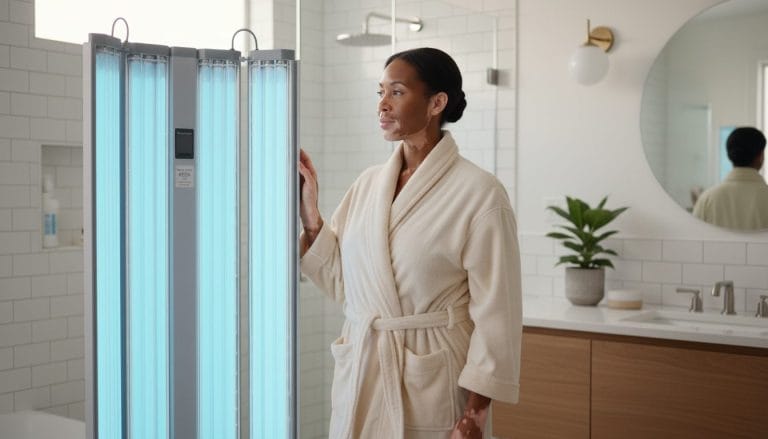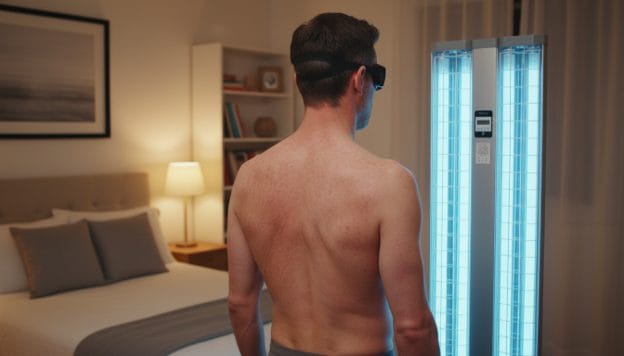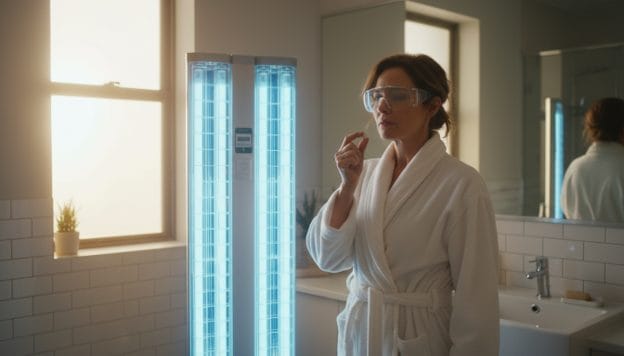
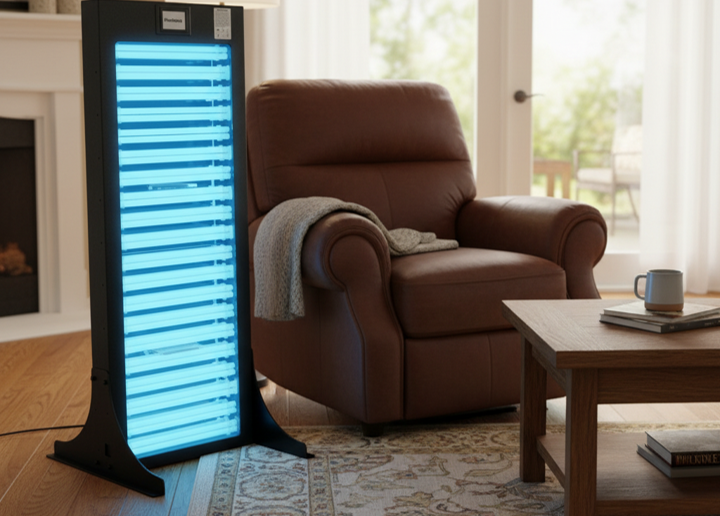
For years, phototherapy has been one of the most effective treatments for persistent eczema, but it came with a major drawback: the need for frequent trips to a clinic. Scheduling your life around several appointments a week is a huge commitment. Today, you can access that same clinical-strength treatment without leaving your house. With a doctor’s prescription, you can use a medical-grade device that delivers precise, therapeutic light in sessions that take just a few minutes. This makes home light therapy for eczema a practical and powerful solution for anyone seeking consistent, effective care that fits seamlessly into their real life.
Light therapy for eczema can reduce inflammation and itching when used according to medical guidelines.
Key Takeaways
- Prioritize Prescription-Strength Therapy: For meaningful eczema relief, choose a medical-grade narrowband UVB (NB-UVB) device. These FDA-cleared systems are clinically proven to calm inflammation, unlike over-the-counter gadgets that aren’t designed for active flares.
- Follow a Doctor-Led Treatment Plan: At-home phototherapy is a medical treatment that requires professional oversight. Your doctor provides a prescription, creates a personalized schedule, and guides you on safe usage to ensure you get the best results without unnecessary risks.
- Commit to Consistency for Lasting Results: Phototherapy works by gradually calming your skin’s immune response, not overnight. Stick to your prescribed treatment schedule, as it typically takes one to two months of consistent sessions to see significant, long-term improvement.
Can At-Home Light Therapy Help Your Eczema?
If you’re dealing with the relentless cycle of itching and inflammation from moderate to severe eczema, you know how frustrating it is to find a treatment that truly works. While creams and medications are common first steps, they don’t always provide the lasting relief you need. This is where at-home light therapy, also known as phototherapy, comes in. It’s a well-established treatment that goes beyond the surface to address one of the root causes of eczema flare-ups: an overactive immune response in your skin. By bringing this technology into your home, you can get consistent, effective care on your own schedule.
How light therapy calms eczema symptoms
Think of an eczema flare-up as your skin’s immune system going into overdrive. Light therapy works by sending a signal to these overactive immune cells to calm down. Using a specific wavelength of ultraviolet (UV) light, this treatment helps dial back the inflammation that causes the redness, swelling, and intense itching you’re all too familiar with. While phototherapy isn’t a cure, it can be incredibly effective at clearing up patches of eczema and giving you longer periods of comfortable, clear skin. For many people, it’s a way to finally break the itch-scratch cycle and find meaningful relief.
The science behind phototherapy for skin
Not just any light will do the trick. Medical-grade phototherapy uses a very specific type of light called narrowband UVB (NB-UVB). This particular wavelength has been studied extensively and is considered highly effective for treating skin conditions because it penetrates the skin and slows the growth of affected skin cells. A doctor prescribes a precise treatment plan, including the dose and frequency, to ensure you get the best results safely. This controlled approach is what makes phototherapy one of the most effective innovative treatment options available for managing chronic skin inflammation and calming your immune system at its source.
What Are Your At-Home Light Therapy Options?
When you start looking into light therapy for eczema, you’ll quickly find that the options range from powerful medical equipment to trendy skincare gadgets. It’s easy to get them confused, but they work in very different ways and deliver vastly different results. The key to finding relief is understanding what separates a clinically proven treatment from a consumer device you can grab off the shelf.
The most effective at-home light therapy involves using specific wavelengths of light that have been studied and proven to calm the overactive immune response behind eczema. This is a big step up from general wellness devices that use different types of light, like red light, which may not be suitable for inflamed skin. Let’s break down the main categories so you can understand what’s available and have a more informed conversation with your doctor about what’s right for you.
Medical-grade narrowband UVB lights
Medical-grade narrowband UVB (NB-UVB) devices are the gold standard for at-home phototherapy. These are clinically proven systems that require a doctor’s prescription to use. Why the prescription? Because they deliver a very specific, controlled dose of ultraviolet B light that has been shown to effectively reduce the inflammation and itching of moderate to severe eczema.
Think of it as bringing a piece of the dermatology clinic into your home. These are serious medical devices designed to provide innovative treatment options under the guidance of your care provider. They ensure you get the precise therapeutic light needed to calm your skin’s immune response, making them a powerful tool for managing your symptoms long-term.
Over-the-counter LED and red light devices
You’ve probably seen over-the-counter (OTC) devices like LED masks and red light wands advertised all over social media. While they might be helpful for general skin wellness or anti-aging, they are not a proven treatment for active eczema flares. In fact, the National Eczema Association cautions against using LED light face masks on inflamed skin, as they can cause more irritation.
These devices use different wavelengths and intensities than medical phototherapy units. While some people might find red light therapy helps strengthen their skin barrier when their eczema is in remission, it’s not designed to treat the underlying inflammation of a flare-up. It’s best to approach these consumer gadgets with caution and always talk to your doctor first.
Why wavelength and intensity matter
The effectiveness of light therapy comes down to science: using the right wavelength at the right intensity. Eczema treatment requires a very specific type of light to work. Medical-grade phototherapy uses narrowband UVB because this precise wavelength is incredibly effective at calming the immune cells in the skin that cause inflammation and itching. It’s a targeted approach designed to address the root of the problem.
Consumer red light devices simply don’t use this therapeutic wavelength. While red light can reach the skin’s surface, it doesn’t have the same proven, anti-inflammatory effect on eczema that NB-UVB does. For a medical condition like eczema, relying on a specific, clinically validated wavelength is what ensures your treatment is both safe and effective.
Different phototherapy devices may be recommended depending on eczema severity and skin sensitivity.
Medical-Grade vs. Consumer Devices: What’s the Real Difference?
When you search for at-home light therapy, you’ll find a dizzying array of wands, masks, and panels, all promising clearer skin. It’s easy to get overwhelmed and wonder if a $50 gadget can do the same job as a clinical unit. The short answer is no. For a medical condition like eczema, the difference between a consumer device and a medical-grade one is night and day. It comes down to safety, power, and the expert guidance you need to get real, lasting results. Let’s break down what truly sets them apart so you can make an informed choice for your skin.
The importance of a prescription and FDA clearance
Think of a prescription not as a hurdle, but as your personal safety net. Medical-grade light therapy devices are powerful tools, and requiring a doctor’s sign-off ensures they’re used correctly and for the right reasons. Your doctor, typically a dermatologist, will confirm that phototherapy is a suitable treatment for your specific type of eczema. This is crucial because, as the National Eczema Society notes, phototherapy must be prescribed to ensure it’s paired with professional oversight. Furthermore, these devices are FDA-cleared, which means they have been rigorously reviewed for both safety and effectiveness. This clearance gives you confidence that you’re using a legitimate medical instrument designed for your condition, not just a beauty gadget with unproven claims.
Clinical strength and proven results
The real power of medical-grade phototherapy lies in its precision. These devices deliver a very specific, controlled dose of narrowband UVB (NB-UVB) light. This isn’t just any light; it’s a clinically proven wavelength that works directly on the overactive immune cells in your skin that cause eczema flare-ups. This targeted approach is how phototherapy reduces inflammation, helping to clear symptoms and give you drug-free control over your skin. Most consumer-grade devices simply can’t match this clinical strength. They may use different wavelengths or lack the power to produce a meaningful therapeutic effect, leaving you with disappointing results and continued frustration.
Professional guidance vs. self-treatment
Buying a consumer device often means you’re on your own, trying to figure out how often and how long to use it. This guesswork can be ineffective or even risky. Medical-grade therapy, on the other hand, comes with a critical component: your doctor’s guidance. Your provider creates a personalized treatment plan just for you, detailing your session frequency, duration, and how to safely adjust the dosage over time. This professional partnership is essential. Experts agree that you should always consult a dermatologist before starting light therapy. They can ensure you’re using the right type of light for active flares and not just a device intended for general skin wellness.
Why Try Light Therapy for Eczema at Home?
Managing eczema often feels like a constant battle of appointments, creams, and frustrating flare-ups. If you’re looking for a way to take back control, at-home phototherapy offers a consistent and effective approach. Instead of scheduling your life around clinic visits, you can access one of the most innovative treatment options from the comfort of your own home. This approach isn’t just about convenience; it’s about integrating a proven therapy into your daily routine to achieve lasting relief and clearer skin. By bringing medical-grade treatment into your personal space, you gain a powerful tool for managing your eczema on your own terms.
Calm inflammation and find relief
When your eczema flares, your skin’s immune cells are working overtime, causing that all-too-familiar cycle of redness, inflammation, and intense itching. The goal of phototherapy is to gently interrupt that cycle. It uses a very specific wavelength of ultraviolet (UV) light to calm the overactive immune response directly in your skin. Think of it as a reset button for your skin’s inflammation. This process helps reduce the underlying inflammation that drives eczema, leading to less redness and, most importantly, relief from the persistent itch that can disrupt your sleep and daily life.
Treat on your schedule, from your home
One of the biggest hurdles with in-clinic phototherapy is the commitment. Traveling to a dermatologist’s office several times a week can be a logistical nightmare. Getting a prescription device for home use changes everything. You can complete your sessions in just a few minutes, whenever it fits best into your day—whether that’s in the morning before work or in the evening while you unwind. Your doctor prescribes the unit and sets the treatment protocol, so you get the same clinical precision you’d receive in an office. It’s a seamless way to make a powerful treatment a manageable part of your life.
A smart investment for long-term care
Eczema is a chronic condition, and managing it effectively requires a long-term strategy. At-home phototherapy is more than just a quick fix; it’s a proven treatment for achieving and maintaining clear skin over time. By consistently calming inflammation, you can reduce the frequency and severity of your flares. This proactive approach can lead to longer periods of remission, giving your skin a chance to heal and helping you feel more in control of your condition. Investing in an at-home unit means you’re investing in your long-term skin health and quality of life.
Our guide explains how eczema phototherapy differs from treatment protocols used for other skin conditions.
Understanding the Risks and Side Effects
Light therapy can be a game-changer for managing eczema, but just like any effective medical treatment, it’s important to understand the full picture. Being aware of the potential risks and side effects helps you and your doctor make the best decision for your health. The goal is always to maximize the benefits while keeping you safe. With the right approach and professional guidance, you can feel confident in your treatment plan.
Most side effects are mild and manageable, but knowing what to watch for is key. This is why working with a healthcare provider is so important—they can help you prepare for and manage any reactions, ensuring your treatment is both safe and effective.
Potential skin reactions and UV exposure
When you start phototherapy, your skin is adjusting to a new treatment. The most common side effects are temporary and feel a lot like a mild sunburn, including some redness, dryness, or itching. For people who are prone to them, UV exposure can sometimes trigger cold sores.
These reactions are usually a sign that your treatment time or frequency needs a small adjustment. Your doctor will work with you to find the right dose of light for your skin. Following your prescribed plan and keeping your skin well-moisturized can help minimize this type of irritation and keep your treatment on track.
What to know about long-term safety
You’ve probably heard that long-term UV exposure can lead to premature skin aging and increase the risk of skin cancer. It’s a valid concern, and it’s why medical supervision is a non-negotiable part of light therapy. Your doctor will create a treatment plan that carefully limits your lifetime exposure to UV light.
It’s also helpful to know that the risk varies depending on the type of light therapy. Modern, medical-grade narrowband UVB treatments have a much lower risk profile compared to older methods. By using a targeted wavelength and sticking to a prescribed schedule, you can access the therapeutic benefits for your eczema while protecting your long-term skin health.
When light therapy might not be right for you
Light therapy is a powerful tool, but it isn’t the right fit for everyone. Certain medical conditions, like lupus, can make you more sensitive to light. The same is true for some medications, including certain antibiotics or diuretics, that can cause photosensitivity. It’s crucial to give your doctor a complete medical history so they can clear you for treatment.
Additionally, applying UV light directly to severely inflamed or broken skin can sometimes cause more irritation. Your doctor will help you determine the best time to start therapy, often waiting until a major flare has begun to calm down. This ensures you’re using one of Cytokind’s innovative treatment options at the moment it can be most helpful.
Your Guide to Safe At–Home Light Therapy
Bringing a powerful treatment like light therapy into your home is a big step, and doing it safely is the most important part of the process. Medical-grade devices are effective because they are potent, which means they need to be used correctly. Think of it as having a professional-grade tool—you need to know the rules to get the best results without any mishaps. Following a clear safety plan ensures you can focus on what really matters: finding relief and feeling better. Let’s walk through the simple but non-negotiable steps to make sure your at-home treatment is both effective and safe from day one.
Why you should always start with your doctor
Your first and most important step is always to talk with your doctor. Medical-grade light therapy isn’t a DIY experiment; it’s a prescribed medical treatment for a reason. A healthcare professional, usually a dermatologist, can confirm if it’s the right fit for you, especially if other treatments haven’t provided the relief you need. They will assess your skin, review your health history, and write a prescription that is tailored specifically to you. The National Eczema Association notes that phototherapy for eczema is typically recommended for moderate to severe cases, and a doctor’s guidance is essential to begin treatment. This conversation ensures you’re starting on the right foot with a plan designed for your unique needs.
Using protective gear the right way
When you start your sessions, using protective gear is not optional—it’s a must for keeping you safe. The light used in phototherapy is powerful, and you need to shield sensitive areas. The National Eczema Society is clear that during phototherapy, you’ll need to wear special UV-blocking goggles to protect your eyes. This is critical for every single session, no matter how short. For men, genital protection is also required to shield this sensitive skin from direct exposure. Your device should come with the right safety equipment, so be sure to use it every time you turn on your light. It’s a simple step that makes a huge difference in your long-term safety.
Following your prescribed treatment plan
Patience and consistency are your best friends when it comes to light therapy. Your doctor will give you a specific treatment plan, and sticking to it is the key to seeing real improvement. According to NYU Langone Health, most people begin with low-dose sessions about three times a week. It’s important to follow this schedule and not overdo it, as your skin needs time to adapt. It can take one to two months of consistent at-home therapies for eczema to notice a real difference, so don’t get discouraged if you don’t see changes overnight. Your prescribed plan is designed to maximize results while minimizing risks, so trust the process and attend every scheduled session.
What to Expect from Your At-Home Treatment
Starting any new treatment comes with questions. When will I see a change? How often do I need to do it? Knowing what’s ahead can help you feel confident and committed to your care plan. At-home phototherapy is a process that requires consistency, but many people find it becomes a simple and empowering part of their routine. Your journey to clearer, calmer skin is unique to you, but here is a general idea of what you can expect as you get started with your prescribed light therapy treatment.
How long until you see results?
Patience is your best friend when it comes to light therapy. While it’s tempting to look for immediate changes, phototherapy works gradually to calm inflammation in your skin. Most people begin to see a noticeable improvement after one to two months of consistent treatments.
Don’t get discouraged if your skin doesn’t transform overnight. The therapy is designed to create lasting change by addressing the overactive immune response at the root of your eczema. Sticking with the schedule prescribed by your doctor is the most important step. The goal is steady progress, and giving your body the time it needs to respond is a key part of the phototherapy process.
Your treatment frequency and session length
Consistency is the foundation of a successful light therapy plan. Most treatment protocols start with sessions about three times a week. Your doctor will create a personalized schedule for you, but this is a common starting point. The entire course of treatment often lasts between 12 and 16 weeks, depending on your skin’s response.
Each session is surprisingly quick. You’ll likely start with exposures lasting just a few seconds. Your doctor will guide you on how to gradually increase the duration over time. This careful approach helps your skin adapt to the light and minimizes the risk of side effects like redness or irritation. Following your prescribed schedule is crucial for achieving the best possible results.
How to track your skin’s progress
Keeping a record of your progress is a great way to stay motivated and have more productive conversations with your doctor. A typical trial period for phototherapy is three to six months. During this time, your doctor will want to know how your skin is responding.
Consider taking weekly photos of the affected areas in the same lighting to create a clear visual log. You could also keep a simple journal to note changes in itchiness, redness, and overall comfort. This information is incredibly valuable for your care provider, helping them determine if the treatment is working effectively or if adjustments are needed. Tracking your journey helps you and your doctor make the best decisions for your long-term skin health and explore all your innovative treatment options.
How to Choose the Right At-Home Device for You
Finding the right at-home light therapy device can feel like a big decision, but it doesn’t have to be overwhelming. When you know what to look for, you can confidently choose a tool that fits your treatment plan and lifestyle. The goal is to find a device that is safe, effective, and tailored to your specific needs, turning your home into a convenient space for healing.
Think of this as an investment in your long-term skin health. By focusing on a few key areas—the device’s features, how it matches your treatment goals, and the realities of quality and cost—you can make a choice that helps you manage your eczema and reclaim comfort in your own skin.
Key features to look for
When you start comparing devices, it’s easy to get lost in the technical details. Let’s simplify it. The most important feature to look for is the type of light the device emits. For eczema, medical-grade phototherapy uses specific ultraviolet (UV) light to calm inflammation. Research and clinical practice show that the most effective type uses narrowband ultraviolet B (NB-UVB) light. This specific wavelength is the gold standard for treating skin conditions like eczema.
You’ll also want a device that offers precise, controlled doses. The best at-home units are prescribed by a doctor and allow your care provider to program the exact dose you need for each session. This ensures your treatment is both safe and effective. Finally, always check for FDA clearance. This indicates the device has been reviewed for safety and performance, giving you peace of mind.
Matching a device to your treatment needs
Medical phototherapy is a proven treatment for moderate to severe eczema, and at-home units are designed to be a convenient extension of the care you receive in a clinic. The right device for you will depend on the extent and location of your eczema. If you have small, localized patches, a handheld device might be all you need. For more widespread eczema, a larger panel or full-body unit would be more practical.
It’s also important to remember that this is a prescribed medical treatment, not just casual sun exposure. While a little sunlight can sometimes feel good, controlled UV light is crucial for effective therapy without the risks of excessive sun. Your device should allow you to follow a structured plan from your doctor, ensuring you get the therapeutic benefits safely.
Understanding quality and cost
High-quality phototherapy devices are medical equipment, and for good reason. Effective and safe light therapy must be prescribed by a doctor, typically a dermatologist who understands your skin and health history. This professional guidance is what separates medical-grade treatment from consumer gadgets. Your doctor’s prescription ensures you’re using the right type of light at the correct intensity and frequency for your specific condition.
Because these are prescribed medical devices, the cost can sometimes be covered by insurance. It’s always a good idea to check with your insurance provider to see what your plan covers. Companies like Cytokind offer innovative treatment options with prescription-based, FDA-cleared home units that bring clinical-strength care directly to you. Investing in a high-quality, prescribed device means you’re not just buying a product; you’re committing to a professionally guided treatment plan designed for real results.
Related Articles
- At-Home Phototherapy for Atopic Dermatitis: What to Know
- Phototherapy – Safe & Effective Treatment for Psoriasis & Eczema
- Buy a Home Phototherapy Unit: A Prescription Guide
- 4 Best At-Home Phototherapy Lamps for Psoriasis
- Your Guide to Safe At-Home UVB Therapy for Psoriasis
Frequently Asked Questions
Is at-home phototherapy the same as using a tanning bed or getting more sun? Not at all. While both involve UV light, medical phototherapy is a highly controlled treatment. It uses a very specific wavelength called narrowband UVB, which is proven to calm skin inflammation. Tanning beds and natural sunlight emit a broad spectrum of UV rays, which can be less effective and carry higher risks. Think of it as the difference between a targeted medical prescription and a wild guess—one is precise and guided by a doctor, while the other is unpredictable.
How do I know if I’m a good candidate for this treatment? The only way to know for sure is to have a conversation with your doctor, preferably a dermatologist. They will review your health history, the severity of your eczema, and what treatments you’ve tried before. Light therapy is typically considered for moderate to severe cases that haven’t responded well to topical creams. Your doctor is your best partner in determining if this is the right next step for you.
What does a typical treatment session feel like? A session is surprisingly simple and quick, often lasting just a few minutes. You’ll stand in front of the light panel, wearing your protective goggles, for the exact duration your doctor prescribed. During the treatment, you might feel a gentle warmth on your skin, but it shouldn’t be uncomfortable. Afterward, it’s normal for your skin to look slightly pink, similar to a very mild sunburn, but this usually fades quickly.
Will my insurance help pay for an at-home device? Many insurance plans do cover prescribed, FDA-cleared at-home phototherapy units, but coverage can vary. Since these are considered durable medical equipment, it’s always best to contact your insurance provider directly to understand your specific benefits. Your doctor’s office or the device supplier can often help you with the paperwork needed for pre-authorization.
I’ve seen red light therapy masks for skin. Are those effective for eczema? While red light devices are popular for general skin wellness and anti-aging, they are not a proven treatment for active eczema flares. The science behind eczema treatment points specifically to narrowband UVB light, which has a unique ability to calm the immune response in the skin. Red light uses a different wavelength and doesn’t have the same anti-inflammatory effect. For a medical condition like eczema, it’s important to stick with clinically validated treatments.