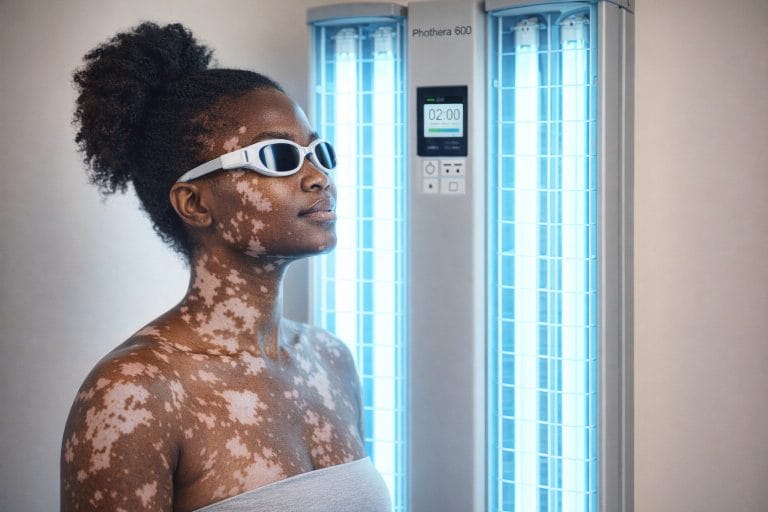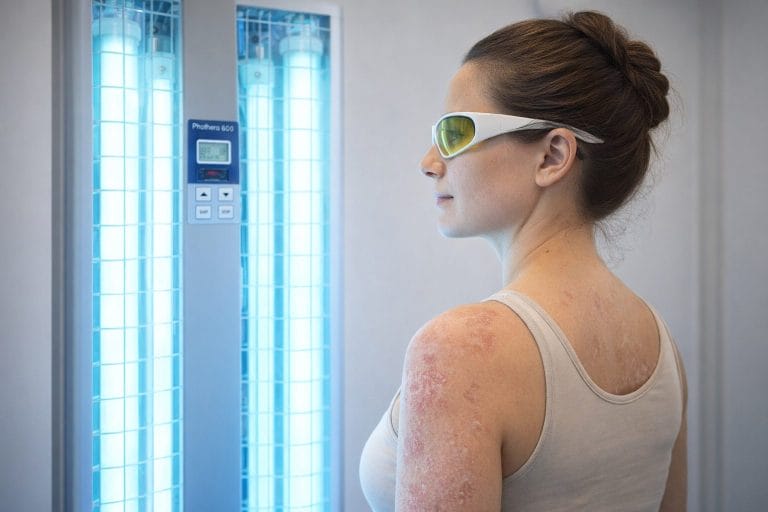
For many people with chronic conditions, the idea of traveling to a clinic several times a week for treatment is exhausting. At-home phototherapy offers a more convenient and consistent way to manage your health, putting you in control of your schedule. But can you afford it? That’s where the question of medicare uv light therapy coverage for home devices comes in. The good news is that Medicare does cover FDA-cleared home units as durable medical equipment (DME). However, there are specific requirements you need to meet. This article explains the process for getting an at-home device approved, what it will cost, and how to work with your doctor to make it happen.
Key Takeaways
- Medical Necessity Is Your Key to Coverage: Medicare will cover UV light therapy, including at-home devices, but only if your doctor provides clear documentation proving the treatment is essential for your specific health condition.
- Understand Your Costs with Medicare Part B: Once you meet your annual deductible, expect to pay a 20% coinsurance for approved treatments and at-home devices, which are covered as durable medical equipment.
- Your Doctor Is Your Best Advocate: A successful approval starts with your doctor, who provides the diagnosis, prescription, and detailed treatment history needed to build a strong case for coverage with Medicare.
What Is UV Light Therapy?
If you’re exploring treatment options for an autoimmune or skin condition, you may have come across UV light therapy. So, what is it, exactly?
It’s important to know that this is very different from using a commercial tanning bed. Medical phototherapy devices are designed to emit only the specific wavelengths of light that have therapeutic benefits, filtering out the more harmful rays. The goal isn’t to get a tan, but to deliver a precise, doctor-prescribed dose of light to reduce inflammation, slow down the rapid production of skin cells, and ease symptoms like itching and pain.
This therapy is a go-to for many people because it can treat affected areas directly without the systemic side effects that can come with some medications. For many living with chronic conditions, phototherapy offers a way to manage their health effectively. At Cytokind, we focus on these types of innovative treatment options to help you find relief and regain control over your well-being.
The Different Types of UV Light Therapy
When you and your doctor discuss phototherapy, you’ll likely hear about a few different types. The most common forms use either UVA or UVB light. UVA therapy, often called PUVA, combines UVA light with a light-sensitizing medication called psoralen. The other main category is UVB therapy, which has two forms: Broadband UVB and Narrowband UVB. Narrowband UVB (NB-UVB) is the more modern and widely used option. It uses a very small, specific part of the UVB light spectrum. This targeted approach has been shown to be highly effective for many conditions while minimizing the risk of side effects like skin burning.
How It Helps Treat Autoimmune and Skin Conditions
UV light therapy works by directly addressing the overactive immune response that drives many autoimmune and skin conditions. When the therapeutic light penetrates the skin, it helps to suppress the inflammatory processes causing your symptoms. Doctors use UV light therapy to treat a variety of common conditions, including psoriasis, eczema (atopic dermatitis), and vitiligo. By slowing down excessive skin cell growth in psoriasis or reducing the inflammatory response in eczema, phototherapy can lead to significant clearing and relief. Research continues to show its effectiveness, with major studies confirming that home-based phototherapy can be just as effective as treatment in a clinic.
Does Medicare Cover UV Light Therapy?
The short answer is yes, Medicare often covers ultraviolet (UV) light therapy when a doctor determines it’s medically necessary to treat your condition. This is great news if you’re managing a chronic autoimmune or skin condition, as it makes a highly effective treatment more accessible. According to official guidelines, Medicare coverage isn’t limited to sessions at a clinic; it can also extend to FDA-cleared UV light units prescribed for at-home use. This gives you and your doctor the flexibility to choose a treatment plan that fits your life and helps you manage your symptoms consistently.
The key to getting approval rests on that crucial term: “medically necessary.” This simply means the therapy isn’t an optional or cosmetic choice but an essential tool for treating your health condition. Your doctor’s prescription and detailed medical records are what signal this necessity to Medicare. While it’s not an automatic green light for every situation, a clear process is in place. By understanding the requirements and working closely with your healthcare provider, you can build a strong case for getting the therapy you need covered.
What Medicare Part B Requires for Coverage
Your UV light therapy coverage will fall under Medicare Part B, the part of your plan that covers outpatient medical services and durable medical equipment. To get your treatment approved, you and your doctor will need to check a few specific boxes. Think of it as a simple but mandatory checklist. First, you need a formal diagnosis of a qualifying condition. Next, you must have a doctor’s order, or prescription, specifically for UV light therapy. Your doctor must also provide documentation showing the treatment is medically necessary for you. Finally, the therapy must be administered or supplied by a healthcare provider or facility that accepts Medicare. When these criteria are met, Medicare covers light therapy for many patients, helping to cover the costs of both clinical treatments and at-home devices.
How to Prove Medical Necessity
The phrase “medically necessary” can sound intimidating, but it simply means your doctor has confirmed that UV light therapy is a vital part of your treatment plan. To communicate this to Medicare, you’ll need to provide clear evidence. This usually involves two key steps. First, your healthcare provider must supply thorough documentation that outlines your diagnosis and explains why UV light therapy is the appropriate treatment for your specific situation. Second, for some therapies, you may need to show that you’ve already tried other standard treatments without success. For example, if previous medications or topicals didn’t work, UV therapy may be approved as the next logical step. Partnering with your doctor to document your treatment history is the most effective way to build a strong case for coverage.
Which Conditions Qualify for Medicare Coverage?
When you’re exploring innovative treatment options like UV light therapy, one of the first questions is always about coverage. The good news is that Medicare does cover phototherapy, but it’s specific about which conditions qualify. The key factor in every decision is whether the treatment is considered “medically necessary” for your specific diagnosis. For the most part, Medicare’s guidelines are well-established for chronic skin conditions where
If you have psoriasis, severe dermatitis, or vitiligo, you’re in a strong position to get coverage. These conditions have clear guidelines and are widely recognized as responsive to UV light therapy. However, even with a qualifying diagnosis, you and your doctor will need to provide documentation showing why this treatment is the right choice for you, especially if you’ve tried other therapies without success. For other autoimmune conditions, securing coverage can be more complex, but it’s not impossible. Understanding where your condition fits within Medicare’s framework is the first step toward building a successful case for approval.
Psoriasis and Severe Dermatitis
If you’re living with psoriasis, you’ll be glad to know that Medicare explicitly covers light therapy for its treatment. Both Original Medicare and Medicare Advantage plans help pay for phototherapy when it’s deemed medically necessary. According to the Centers for Medicare & Medicaid Services, treatment with ultraviolet (UV) light is a recognized and covered approach.
Often, to meet the “medically necessary” requirement, your doctor will need to document that standard treatments, like topical creams, haven’t worked for you. This shows that light therapy is the next logical and necessary step in your care plan. So, if you and your doctor agree that phototherapy is right for you, you can move forward with confidence knowing it’s a covered service.
Vitiligo and Other Skin Disorders
Medicare’s coverage for light therapy extends beyond psoriasis. Doctors use UV light therapy to treat a variety of other common skin conditions, and many of these are covered when medically necessary. Conditions like vitiligo and severe eczema (atopic dermatitis) often qualify for phototherapy under Medicare.
Just as with psoriasis, the path to approval involves clear documentation from your physician. Your medical records should detail your diagnosis and explain why light therapy is an appropriate and necessary treatment for managing your specific condition. Having a well-documented history helps demonstrate to Medicare that you meet the criteria for coverage, making the approval process smoother for you and your care team.
What About Other Autoimmune Conditions?
While Medicare’s most established policies focus on dermatological conditions, coverage is sometimes available for other, less common disorders. For example, certain forms of cutaneous T-cell lymphoma, like mycosis fungoides, can be approved for home phototherapy. This shows that coverage can extend beyond psoriasis and eczema when there is a strong medical case.
For systemic autoimmune diseases where light therapy is an emerging treatment, getting Medicare coverage can be more challenging. Because there isn’t a national coverage determination for these conditions, approval often depends on a case-by-case review. Your doctor will need to build a compelling argument for medical necessity, citing clinical evidence that supports using light therapy for your specific situation.
What Will UV Light Therapy Cost with Medicare?
Understanding the financial side of treatment is just as important as understanding the therapy itself. When you’re managing a chronic condition, unexpected costs can add a layer of stress you just don’t need. So, when your doctor recommends UV light therapy, one of your first questions is likely, “How much will this cost?” If you have Medicare, the good news is that you can get help with the expense, but it’s important to know exactly what to expect before you begin. Medicare coverage for treatments like phototherapy can seem complex, but it generally boils down to a few key rules about medical necessity and your specific plan benefits.
The total cost will depend on a few key factors, including your specific Medicare plan, the type of device you use, and whether you choose to have your treatments in a clinic or use a prescribed device at home. For example, treatments in a hospital setting are handled differently than those in an outpatient clinic. Similarly, the process for covering an at-home unit involves specific guidelines. Getting clear on these details empowers you to make the best decision for your health and your budget. Let’s break down what you can anticipate paying so you can move forward with clarity.
Your Costs: The Part B Deductible and Coinsurance
If your doctor confirms that UV light therapy is medically necessary for your condition, Medicare Part B helps cover the cost. Here’s how it works: First, you’ll need to pay your annual Part B deductible. For 2025, that amount is $257. Once you’ve met your deductible for the year, Medicare will pay 80% of the approved cost for your therapy. You will be responsible for the remaining 20% coinsurance. This 80/20 split applies to treatments you receive in a doctor’s office or outpatient clinic, and it also applies to FDA-cleared UV light units that your doctor prescribes for you to use at home.
Comparing Clinic vs. Home Treatment Costs
When deciding between treatment settings, it’s helpful to look at the cost differences. If you receive UV therapy in a hospital, it falls under Medicare Part A, which has a much higher deductible ($1,676 for 2025). A more common and cost-effective path is using a home phototherapy unit prescribed by your doctor. These devices are covered under Medicare Part B as durable medical equipment (DME). After you meet your Part B deductible, you’ll pay your 20% coinsurance on the cost of the device. New home units can range from $500 to over $2,000, so knowing your share of the cost ahead of time helps you plan your treatment with confidence.
Why Getting Medicare Coverage Can Be a Challenge
Even when UV light therapy is the right treatment for you, getting Medicare to cover it can feel like an uphill battle. The system has specific requirements that can be tough to meet without the right preparation. Understanding these hurdles ahead of time is the best way to prepare a strong case for coverage and avoid frustrating denials.
The main issues often come down to proving that the treatment is absolutely necessary for your health and that you’ve exhausted other options. It’s not just about your doctor recommending it; it’s about presenting the right evidence in the right way. Let’s break down what that looks like and what you can do if your claim is denied.
Meeting Strict Eligibility and Documentation Rules
Medicare operates on a system of checks and balances, and a key requirement for coverage is proving your treatment is medically necessary. This means you can’t just want the therapy; your doctor must show it’s essential for treating your condition. To get approval, you’ll typically need a clear diagnosis for a qualifying condition like psoriasis, a formal prescription from your doctor, and detailed medical records.
For certain therapies, Medicare also wants to see that you’ve tried and failed with other standard treatments first. For example, before approving a more intensive therapy, they may require documentation showing that topical creams or other conventional approaches didn’t work for you. Without this thorough paperwork, claims are often denied, so keeping meticulous records with your doctor is crucial.
How to Handle Claim Denials and Appeals
Receiving a claim denial can be disheartening, but it’s not the final word. The first step is to work with your doctor to understand why the claim was rejected and to strengthen your case. Often, it comes down to providing more detailed documentation that clearly explains why the therapy is medically necessary for you. Your doctor’s notes should tell a clear story of your treatment history and why UV light therapy is the logical next step.
Medicare follows a set of national rules called National Coverage Determinations (NCDs) that outline what is covered. Reviewing these with your provider can help you build a better appeal. If you have a Medicare Advantage plan, remember that their rules might differ, so it’s always a good idea to contact your plan provider directly to understand their specific requirements and appeal process.
Clearing Up Myths About Medicare Coverage
Navigating Medicare can feel like a maze, especially when you’re looking into treatments like UV light therapy. There’s a lot of conflicting information out there, which can be frustrating when you’re just trying to find a solution that works for you. Let’s clear the air and separate the facts from the fiction so you can approach the process with confidence. The good news is that coverage is often more accessible than you might think, as long as you understand the rules.
Myth vs. Fact: What’s Really Covered
Let’s start with the biggest myth: that Medicare simply doesn’t cover UV light therapy. That’s not true. The fact is, Medicare does cover ultraviolet light therapy when it’s deemed medically necessary for your condition. This applies to both Original Medicare (Part A and Part B) and Medicare Advantage plans. Coverage isn’t just for treatments you receive in a clinic; it can also include home phototherapy units. To get coverage, you’ll need a clear diagnosis for a qualifying condition and a prescription from your doctor confirming the treatment is essential for your health.
Know the Limits of Your Coverage
While it’s great to know that coverage is possible, it’s also important to understand that it isn’t guaranteed for everyone. Medicare has specific guidelines, known as National Coverage Determinations, that outline what it will pay for. For certain therapies, Medicare might require you to show that other standard treatments have been tried first without success. This is especially true for severe conditions. The most critical piece of the puzzle is documentation. Your medical records must clearly show why the therapy is necessary for your specific situation. Without solid paperwork from your doctor, a claim can easily be denied.
How to Get Your UV Light Therapy Approved
Getting approval for any medical treatment can feel like a puzzle, but it’s one you can solve with the right pieces in place. When it comes to UV light therapy, a successful approval often comes down to clear documentation and strong communication with your healthcare provider. Think of it as building a case for why this treatment is the right next step for you. By being organized and proactive, you can confidently work through the process and get closer to the relief you need. Let’s walk through the two most important steps: gathering your documents and working with your doctor.
Gather the Right Medical Documents
Before you can get coverage, you need to show that your treatment is justified. Your insurance provider, including Medicare, will want to see a few key items. First, you’ll need a clear diagnosis for a qualifying condition from your doctor. Next, you must have a formal prescription or doctor’s order for the UV light therapy. Finally, and most importantly, the treatment must be proven to be medically necessary. This simply means the therapy is required to treat your specific illness or condition. Keeping organized records that clearly explain why this treatment is essential for your health will make the approval process much smoother.
Partner with Your Doctor for Approval
Your doctor is your most important partner in getting your UV light therapy approved. Start by having a conversation about whether this treatment is right for you. If you both agree it is, your doctor will be the one to provide the necessary paperwork and prescription. They can also document why other treatments haven’t worked for you, which strengthens your case for medical necessity. For some therapies, Medicare requires proof that you’ve tried other options first, so having your doctor clearly document this is critical. Make sure your doctor or the treatment facility you plan to use accepts Medicare to avoid any surprise bills down the road.
Does Medicare Cover At-Home UV Light Devices?
Traveling to a clinic for every light therapy session isn’t always practical. The good news is that you may not have to. Medicare can cover UV light devices for at-home use, making treatment much more accessible. However, coverage isn’t automatic. The device must be considered essential for your health, and you’ll need to follow specific steps to get it approved. Think of it less like a standard prescription pickup and more like getting specialized medical equipment, which requires clear justification and paperwork.
Requirements for At-Home Equipment
So, will Medicare help pay for a light therapy device you can use at home? The short answer is yes, in many cases. Medicare classifies these devices as durable medical equipment (DME), which means they are covered as long as they are deemed medically necessary. To meet this requirement, your doctor must provide a prescription confirming that the device is an essential part of your treatment plan for a specific condition, like psoriasis. It’s not enough to simply want the device; your healthcare provider has to officially document why it’s a critical tool for managing your health.
Following Prescription and Medical Equipment Guidelines
Getting that “medically necessary” approval from Medicare hinges on following the rules closely. It is crucial that you adhere to your doctor’s prescription and the official guidelines for durable medical equipment. This ensures you’re using the device correctly and safely as part of your prescribed care. Understanding the financial side is also important. After you meet your annual Part B deductible, you will typically be responsible for 20% of the Medicare-approved amount for the device. Knowing these guidelines ahead of time helps you prepare for any out-of-pocket costs and avoid unexpected bills.
Where to Find Help with the Approval Process
Getting approval for UV light therapy can feel like a job in itself, but you don’t have to do it alone. Your healthcare provider and patient advocacy groups are two of your strongest allies. They have experience with the process and can provide the guidance and documentation you need to build a strong case for coverage. Leaning on their expertise can make a significant difference in getting your treatment approved, whether you’re seeking therapy in a clinic or looking to start treatment at home. By working with these resources, you can confidently take the next steps toward getting the care you need.
How Your Doctor Can Support You
Your doctor is your most important partner in this process. Start by having a conversation with them about whether UV light therapy is the right fit for your condition. If it is, they can provide the formal diagnosis and paperwork required by Medicare. A key piece of this is the doctor’s order, which must state that light therapy is medically necessary for you. For some conditions, your doctor may also need to document that other treatments haven’t worked. This detailed medical history is crucial, as it directly addresses the coverage criteria Medicare uses to evaluate claims.
Finding Guidance from Patient Advocacy Groups
Patient advocacy groups can be an incredible source of information and support. Organizations like the National Psoriasis Foundation offer advice, share resources, and connect you with a community of people who understand what you’re going through. These groups are also at the forefront of advocating for better insurance coverage for phototherapy, fighting to make treatments more accessible and affordable for everyone. They often have practical tips for dealing with insurance providers and can point you toward programs that may help with equipment costs if you face a denial. Reaching out to them can give you both the knowledge and the encouragement to keep moving forward.
Your Next Steps and Other Coverage Options
Now that you understand the approval process and how to handle potential roadblocks, let’s talk about what to do next. Getting your UV light therapy covered involves making sure your insurance plan is the right fit and that your chosen doctor is in-network. It might seem like a lot, but breaking it down into these two key areas will make the path forward much clearer. Whether you have Original Medicare or are thinking about a different plan, knowing your options is the first step toward getting the innovative treatment you need.
Considering a Medicare Advantage Plan
If you have Original Medicare, you might also want to look into a Medicare Advantage (Part C) plan. These are offered by private companies approved by Medicare and are required to cover everything that Original Medicare does. So, if UV light therapy is deemed medically necessary, a Medicare Advantage plan must provide at least the same level of coverage. The main difference often comes down to your out-of-pocket costs, like copays, and which suppliers you can use for at-home equipment. It’s essential to check with your plan provider to understand the specific rules and costs before you commit.
How to Find a Provider Who Accepts Medicare
Before you schedule your first appointment, always confirm that your doctor or treatment center accepts Medicare. This simple step can save you from unexpected medical bills down the road. A provider who “accepts assignment” agrees to the Medicare-approved amount as full payment and won’t charge you more than the standard deductible and coinsurance. If you have a Medicare Advantage plan, you’ll need to check your plan’s network to find an approved provider. The best way to be sure is to call the clinic directly or use Medicare’s official physician finder tool to search for providers in your area.
Related Articles
- Clinical NB-UVB Phototherapy: Advanced Care
- Phototherapy – Safe & Effective Treatment for Psoriasis & Eczema
- Order NB-UVB Therapy Device
- Cytokind Featured in Scientific American on Breakthroughs in UVB Therapy for Autoimmune Disease – Cytokind
- NB-UVB Therapy Insights: Research & Expert Guidance
Frequently Asked Questions
Is medical UV light therapy the same as using a tanning bed? Not at all. Medical phototherapy devices are designed to emit very specific, controlled wavelengths of light that have therapeutic benefits. Unlike tanning beds, which use a broad spectrum of UV light to darken the skin, medical devices filter out harmful rays and deliver a precise, prescribed dose to calm your immune system and treat your condition without the same risks.
What does “medically necessary” actually mean for my UV therapy? Think of “medically necessary” as your doctor’s official confirmation that this treatment is essential for your health. To prove this to Medicare, your doctor will provide documentation showing your diagnosis and explaining why UV therapy is the right approach for you. Often, this includes showing that you’ve already tried other standard treatments, like creams or pills, without getting the results you need.
Can I get an at-home UV light device covered by Medicare? Yes, it’s definitely possible. Medicare can cover FDA-cleared phototherapy units for at-home use when your doctor prescribes one and confirms it’s medically necessary. These devices are classified as durable medical equipment (DME) and fall under your Medicare Part B benefits, following the same deductible and 20% coinsurance rules as other outpatient services.
What if my autoimmune condition isn’t a skin disorder? Is coverage still possible? While Medicare has clear guidelines for skin conditions like psoriasis and vitiligo, getting coverage for other autoimmune diseases can be more complex. It often requires a case-by-case review where your doctor must build a very strong argument for medical necessity, citing clinical evidence that supports using light therapy for your specific condition. It’s more of a challenge, but not impossible with thorough documentation.
My claim was denied. What should I do now? A denial can be frustrating, but it isn’t the end of the road. The first step is to work with your doctor to understand exactly why the claim was rejected. Most often, it’s a matter of incomplete documentation. You and your doctor can then gather more detailed information to strengthen your case and file an appeal, providing a clearer picture of your treatment history and why UV therapy is essential for you.
📲 Ready to start treatment?
Connect with our care team to navigate Medicare coverage and get a prescription for at-home UV light therapy.