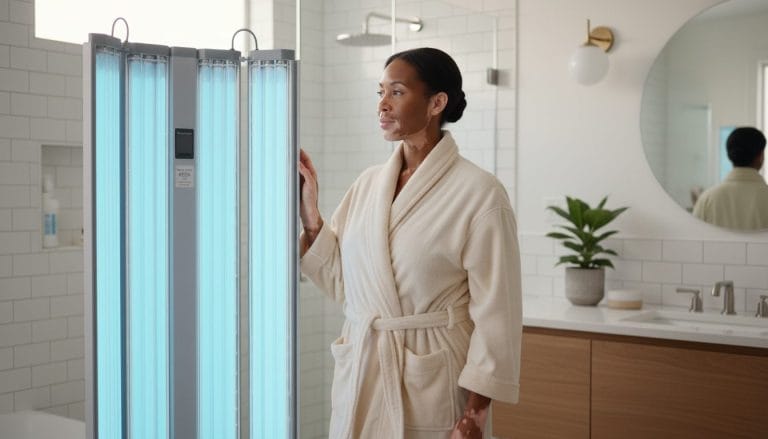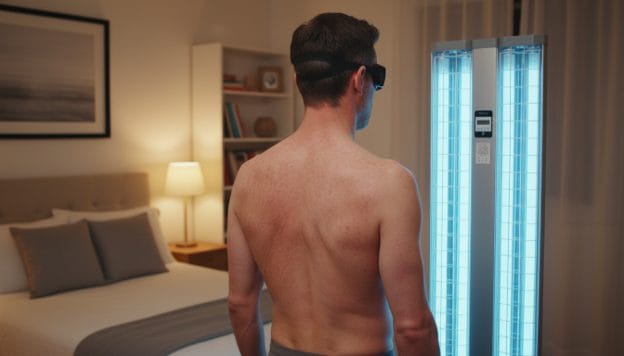
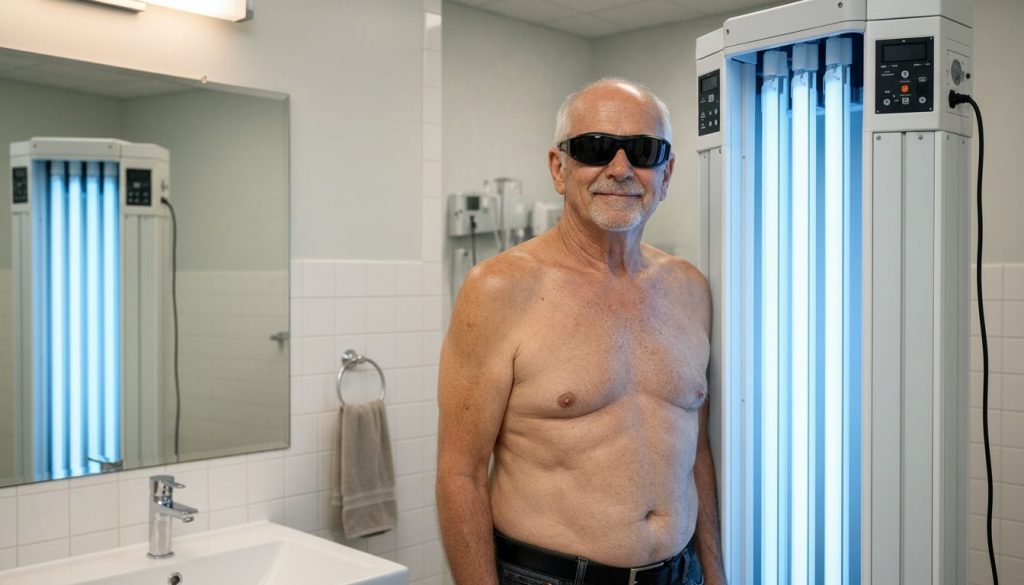
For decades, narrowband UVB (NB-UVB) phototherapy has been a trusted treatment for chronic skin conditions. Now, groundbreaking research is revealing its potential to address the root cause of systemic autoimmune diseases—by calming the immune system itself.
What the Research Shows
The scientific community has been actively investigating how UVB light influences immune function beyond the skin. The landmark Phototherapy for Clinically Isolated Syndrome (PhoCIS) trial, led by Professor Prue Hart at Australia’s Kids Research Institute, has provided compelling evidence that NB-UVB phototherapy produces significant anti-inflammatory effects in individuals with multiple sclerosis.
In this randomized controlled study, researchers found that participants receiving NB-UVB treatment experienced:
- Dramatic reduction in disease severity: Participants with high disease severity on the MS Disease Activity (MSDA) test dropped from 56% to just 11% by day 90
- Decreased systemic inflammation: Measurable reductions in serum inflammatory markers
- Improved immune regulation: Increased T-regulatory cells and IL-10-producing dendritic cells that promote immune homeostasis
- Enhanced quality of life: Reported improvements in fatigue within weeks of treatment
As Professor Hart noted, “We’re uncovering that repeated exposure to narrowband UVB light significantly influences the immune system. It promotes immune homeostasis, fostering a more regulatory and anti-inflammatory environment that endures well beyond the treatment period.”
The Mechanism: How UVB Calms the Immune System
NB-UVB phototherapy works through multiple pathways to restore immune balance:
- Induces T-regulatory cells: These specialized cells help suppress inappropriate immune responses
- Reduces inflammatory cytokines: Decreases production of pro-inflammatory molecules like IL-21
- Modulates dendritic cells: Alters antigen-presenting cells to promote tolerance rather than inflammation
- Supports B-regulatory cells: Maintains a pool of regulatory B cells that can prevent autoimmune attacks
Current FDA-Cleared Indications
Home-based NB-UVB phototherapy devices have received FDA 510(k) clearance for several dermatological conditions:
| Condition | Description |
| Psoriasis | Chronic skin condition causing rapid skin cell buildup |
| Vitiligo | Autoimmune loss of skin pigment |
| Atopic Dermatitis (Eczema) | Inflammatory skin condition causing itchy, inflamed skin |
| Leukoderma | Loss of skin color due to various causes |
| Mycosis Fungoides | Cutaneous T-cell lymphoma affecting the skin |
| Pruritus | Chronic itching secondary to underlying disease |
These conditions share a common thread: immune dysregulation driving inflammation. Insurance coverage for home phototherapy typically requires diagnosis of one of these FDA-cleared conditions, a prescription from a dermatologist, and demonstration that the patient can safely operate the device.
Cytokind’s Vision: Expanding the Promise of Phototherapy
Cytokind is advancing research to translate these FDA-cleared NB-UVB devices from dermatology into broader autoimmune disease management. The company is actively investigating how the immunomodulatory effects observed in the PhoCIS trial could benefit patients with other chronic autoimmune conditions.
Cytokind CEO John MacMahon explains the company’s approach: “We’re inquiring: what could serve as the Ozempic for autoimmune conditions? Might insufficient UVB exposure be interrupting a similar biological pathway—one that we can restore through therapy that leverages the photoimmune response?”
The company’s research strategy focuses on:
- Translational application: Applying proven phototherapy technology to new therapeutic areas
- Biomarker validation: Using clinically validated tests like the MS Disease Activity (MSDA) assay to measure treatment effects
- Phase II trials: Continuing clinical research to confirm NB-UVB’s benefits for chronic neurological conditions
- Patient-centric innovation: Developing at-home treatment options that reduce the burden of managing chronic disease
Growing evidence suggests that multiple sclerosis and psoriasis share overlapping inflammatory mechanisms. For individuals with both conditions, NB-UVB phototherapy could provide dual benefits—treating skin manifestations while simultaneously addressing systemic inflammation.
Taking the Next Step
If you or a loved one is living with an autoimmune condition and are interested in learning more about how NB-UVB phototherapy, we invite you to connect with our team.
Schedule a Consultation with Cytokind Today. Our team can provide information about NB-UVB therapy that you can share with your medical provider to determine if this treatment approach is appropriate for your specific situation. Together with your healthcare team, we can explore whether phototherapy represents a viable option for managing your immune health.
Contact us to schedule your call and learn more about the science behind UVB therapy for autoimmune conditions.
This blog post is for informational purposes only and does not constitute medical advice. Individuals should consult with qualified healthcare providers before beginning any new treatment modality.