

About 80 percent of people living with multiple sclerosis experience fatigue, making it one of the most common and disabling symptoms of the disease. Despite this, fatigue remains one of the least consistently measured aspects of MS and broader autoimmune conditions.
For many people living with MS, summer heat can be particularly challenging, often intensifying fatigue and significantly reducing quality of life.
Fatigue is often described as low energy or brain fog, but for many patients it reflects a deeper biological state linked to immune activity, chronic inflammation, altered nervous system signaling, and reduced cellular energy production. These systems are interconnected, meaning fatigue is not simply a symptom layered on top of disease, but often a signal of underlying physiological dysfunction. The challenge is that while fatigue is widely recognized, it is rarely tracked in a structured or comparable way over time.
In the past year, there has been growing clinical interest and research activity around phototherapy as a potential adjunctive approach to understanding and managing MS-related symptoms.
What recent research is revealing
A recently published study from lead author Professor Prue Hart and co-authored by Cytokind’s CEO John MacMahon, explored this relationship in more detail. The paper, published in Photochemical & Photobiological Sciences, examined the effects of narrowband UVB phototherapy in individuals with early multiple sclerosis as part of the PhoCIS trial.
While the study was small, several consistent findings emerged:
- Participants receiving phototherapy reported improvements in fatigue and overall quality of life compared to controls.
- Blood analysis demonstrated broad reductions in inflammatory proteins, suggesting systemic immune modulation beyond the skin.
- Researchers identified associations between fatigue scores and inflammatory biomarkers, supporting the idea that fatigue may reflect measurable biological activity rather than being purely subjective.
Participants received a structured course of phototherapy over eight weeks and were followed for twelve months, with assessments spanning clinical outcomes, immune markers, and quality of life measures.
The full study is available here: Insights from a trial of narrowband UVB for early multiple sclerosis | Photochemical & Photobiological Sciences
The challenge of measuring fatigue
One of the key limitations in both research and clinical care is that fatigue can be difficult to measure consistently. Without a structured framework, it becomes hard to determine whether changes are meaningful, temporary, or clinically relevant. It is nearly impossible for a patient to try to articulate their progress versus a week ago; having a simple journal tracking approach is critical to understand the true nature of living with this chronic condition.
To address this, Cytokind uses the Fatigue Severity Scale, a clinically validated 9-question assessment widely used in multiple sclerosis research. It is designed to measure how fatigue affects daily functioning over the past week rather than simply whether fatigue is present.
Each question is scored from 1 to 7, and the total score provides a standardized measure of fatigue severity. A score below 36 generally indicates that fatigue is not clinically significant, while a score of 36 or higher suggests fatigue that may warrant further clinical evaluation. The purpose of the scale is not diagnosis, but to create a consistent baseline that can be tracked over time.
A measurable change for Cytokind patient, Ryan
Ryan, a New Hampshire resident recently diagnosed with MS, began using this framework as part of a broader effort to understand how his condition was changing and improve his symptoms. Alongside lifestyle adjustments, including nutrition, exercise, and ongoing neurologist-directed care, he also began using Cytokind’s at-home narrowband UVB phototherapy device.
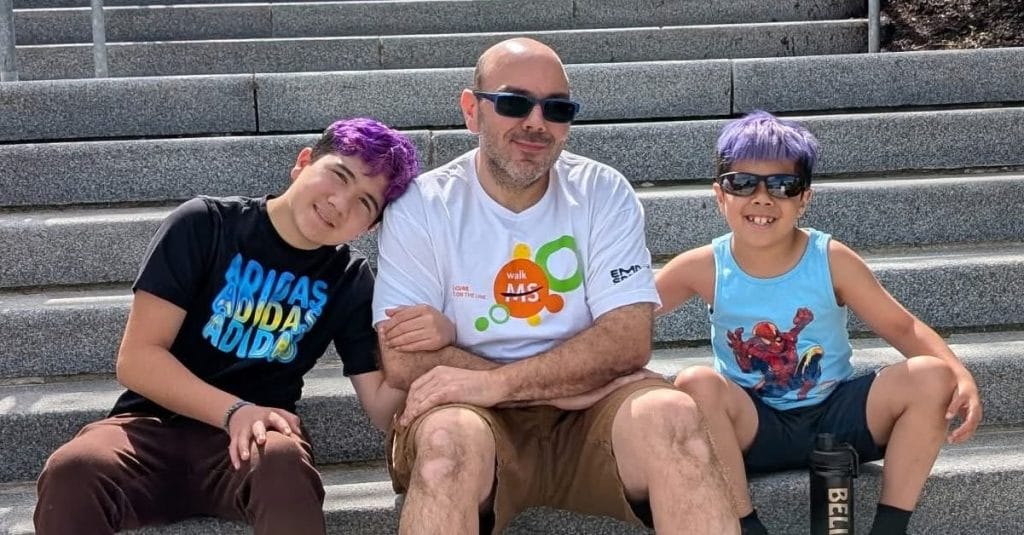
At the beginning of tracking, his Fatigue Severity Scale results showed an average score of 6.6 with a total score of 59, which is above the clinical threshold and consistent with significant fatigue. After a period of regular use of the Cytokind phototherapy device, his follow-up results showed an average score of 3.0 and a total score of 27, placing him below the clinical fatigue threshold.
This represents a 54 percent reduction in fatigue score over the tracking period. While this does not imply causation from any single factor, it demonstrates how fatigue can shift meaningfully when measured consistently rather than described retrospectively. The key distinction is that these changes were captured through structured assessment rather than subjective recall.
Take the fatigue assessment
To make fatigue measurable in practice, Cytokind has developed a fatigue assessment tool based on the Fatigue Severity Scale. It takes less than two minutes to complete and provides a standardized score that can be used as a baseline for tracking change over time. Because fatigue fluctuates and is influenced by multiple biological and environmental factors, a single snapshot is not enough. Repeated measurement is what allows patterns to become visible and meaningful change to be identified.
For individuals who want to better understand their fatigue results or explore how phototherapy is being studied in the context of autoimmune disease, you can also connect directly with the Cytokind team.
This provides an opportunity to ask questions, discuss results, and learn more about ongoing research and clinical direction in this area.You can book a call with the Cytokind team here, and find your FSS score here.