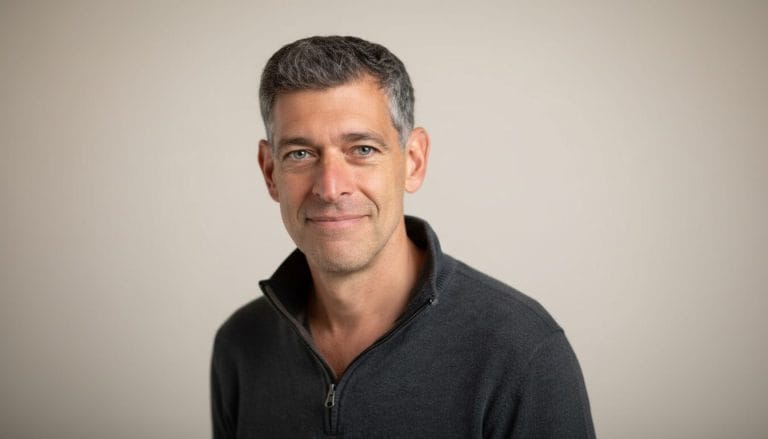
Cytokind CEO and co-founder John MacMahon spent an hour with Casey Ruff on Boundless Body Radio, and he opened with the observation that set the direction for everything Cytokind works on now.
The Result That Didn’t Make Sense
MacMahon sat on the board of Luma Therapeutics, a company treating psoriasis with narrowband UVB light. He’s a physicist and engineer by training, not a physician, and he assumed the lights worked the way they appear to work. Shine them on a plaque, the plaque heals.
Then the first trial results came back.
“People were healing in locations we weren’t shining the lights on.”
That result is the reason he never let the subject go. If skin clears where no light landed, the light isn’t treating skin. Something is traveling.
Your Skin Reads The Light
Narrowband UVB doesn’t penetrate the thickness of a dime. So how does it reach anything?
MacMahon’s answer is that the skin is the immune system’s front line, and it’s built to report back. UV striking the skin sends cells into the lymphatic system carrying a message about conditions outside. In the lab the relationship is close to linear. Double the light, double the cells leaving the skin for the lymph nodes.
Once they arrive, those cells train naive white blood cells. One type matters most here, the regulatory T cell, which MacMahon calls “the traffic cops for your immunity.”
That framing explains a pattern shared by psoriasis, eczema and MS. The immune response rises to meet an insult, which is what it should do. What goes wrong is the signal telling it to come back down. Narrowband UVB appears to supply that signal.
He adds a piece of supporting logic that’s easy to check. NB-UVB is a prescription therapy for vitiligo, eczema, and psoriasis, but no single drug treats all three. A therapy that works across conditions no drug can span is probably acting further upstream than the drugs are.
It Isn’t The Vitamin D
Most people connect sunlight to vitamin D. MacMahon says the data pulls them apart.
Vitamin D is a marker of how much sun you’ve had, not the mechanism behind the benefit. He points to the VITAL trial run by JoAnn Manson at Harvard: 25,000 patients, randomized, placebo controlled, followed for five years, looking at cardiovascular and cancer risk. No benefit from supplementation.
The gap between low and high vitamin D on a survival curve is real, and something drives it. Decades of supplement trials say that something isn’t the vitamin.
The Latitude Gradient
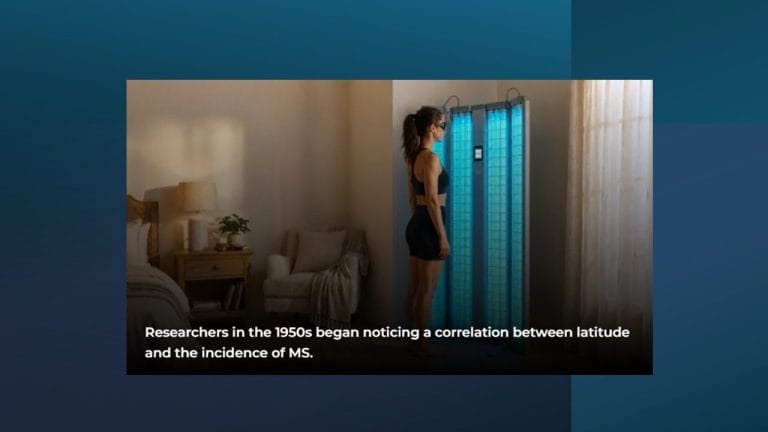
Multiple sclerosis has the strongest tie to sunlight of any condition Cytokind studies. It runs roughly 40 times more prevalent in Canada than at the equator, with the same pattern showing up in Scotland and Tasmania.
What struck MacMahon was that nobody had tried the obvious thing. “We were surprised that nobody had done the Occam’s razor approach, which is, let’s give them light.”
Cytokind’s research partner Prue Hart, an immunologist in Perth, led a trial of narrowband UVB in MS patients. Fatigue is the signal that keeps surfacing. In MacMahon’s description, inflammation won’t let the organs rest, and if your organs don’t rest, you don’t rest either.
“Don’t Burn” Is The Whole Rule
Asked about skin cancer, MacMahon’s guidance is two words. Don’t burn.
Burning is the risk, and burning happens largely because we’re indoors so much that stepping out becomes a shock to a body that would otherwise adapt gradually. He also notes that melanoma risk isn’t spread evenly across populations, running far higher in white skin than in black skin.
Then he points at the Swedish research that followed roughly 30,000 women for decades, a study originally designed to show harm from sun exposure. Sun seekers turned out to have about half the all-cause mortality of sun avoiders. Late in the episode he sizes that effect plainly: the survival difference is comparable to quitting smoking.
A Practical Note On Cost
One detail worth knowing if you have a diagnosed skin condition. MacMahon says the major US insurers, covering roughly half of American adults, will now cover these lights, and the units ship to the home.
His explanation for why insurers came around is economic. In psoriasis, NB-UVB performs comparably to Humira with higher patient quality-of-life satisfaction, at a fraction of the cost, with treatment happening at home instead of in a clinic.
Talking With Your Doctor
If this interests you, bring specific questions:
- Do I have a measurable marker of inflammation we can track?
- Is narrowband UVB appropriate for my condition, and would you write a prescription?
- Does my insurance cover a home phototherapy unit?
- How do I start, and how do I avoid overdoing it alongside natural sun?
That last question isn’t theoretical. MacMahon described a patient whose face kept turning red, which turned out to be a full day of sailing stacked on top of his morning light session. If you’re going to be outside all day, skip the lights that morning.
What NB-UVB Is And Is Not Cleared For
Narrowband UVB devices are FDA-cleared for dermatological conditions including psoriasis, vitiligo and eczema. They are not cleared for multiple sclerosis, Long Covid, cardiovascular disease or cancer. Work in those areas is active research, not an approved indication, and nothing here is a treatment recommendation.
All NB-UVB devices require a prescription. The conversation to have is with your medical provider about whether phototherapy is right for you.
MacMahon’s own closing point had less to do with the hardware than with the habit. Treat sunlight as part of the diet, get it near midday, start small, and let your body tell you when it’s had enough.